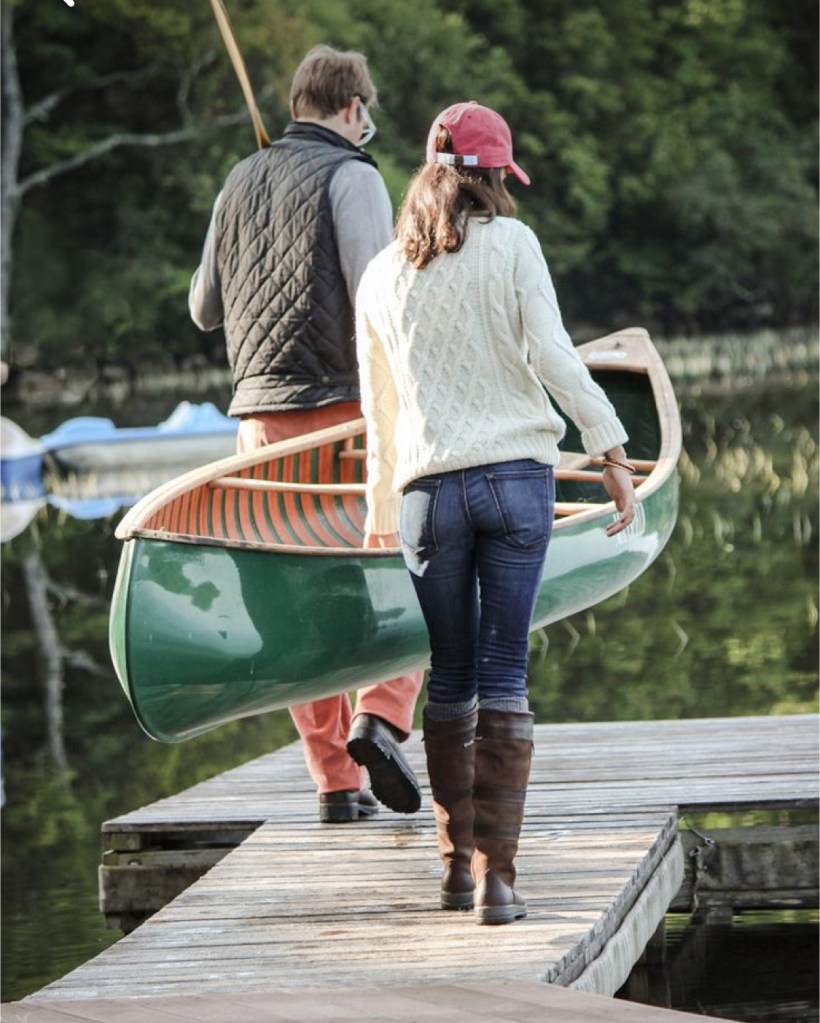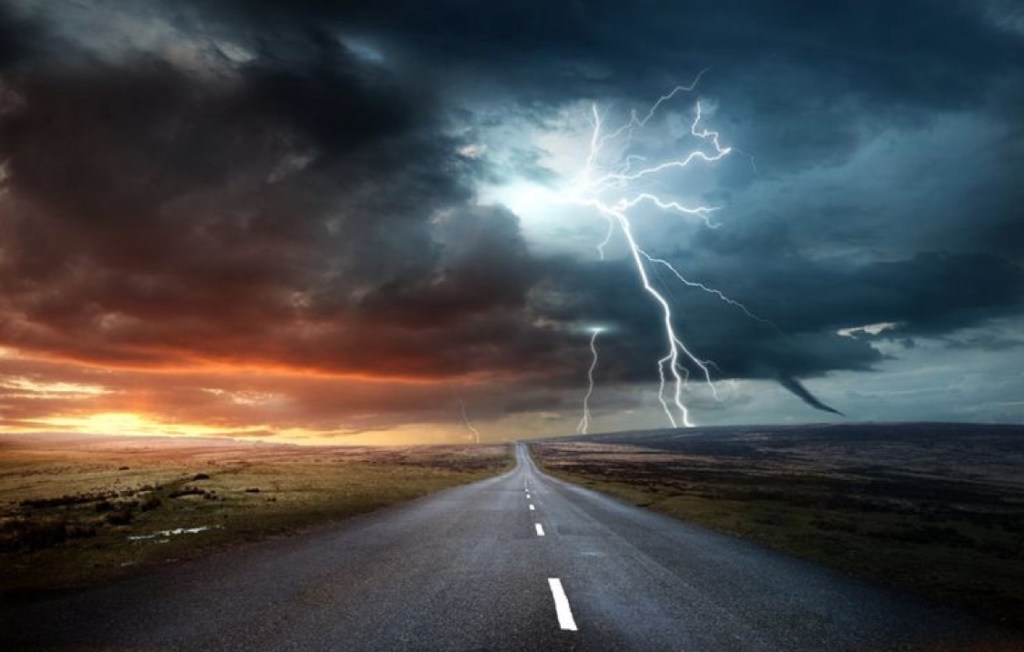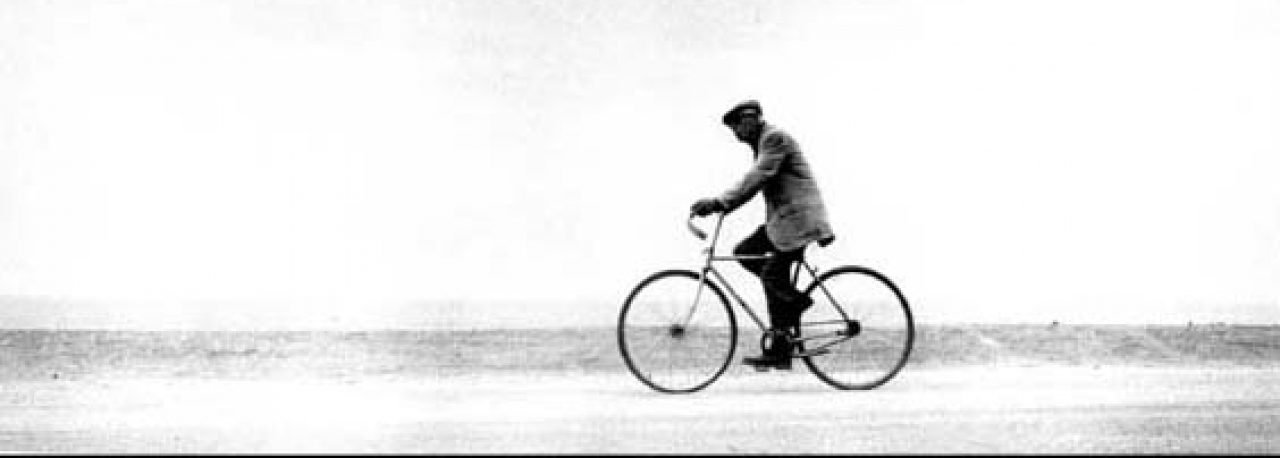
Sinking into the river.

Not drowning, waving. So not sinking, really. Just saying hello. Hi.

It’s actually hard to tell if I’m headed upstream or downstream. Either way I’m not getting anywhere. But is there anywhere to get?

Anyway, I keep stumbling over little bits and pieces that I must have done in the past and, looking at them in the present, I cringe.

So I try to repair them, normally by adding something, when subtraction is actually what’s called for.

Here is an example ….

*

Love lives in a castle of paper-thin walls

On a boat on a river approaching the falls

We head for the rapids, from there see the end

The paper is fragile and yet we pretend

That the walls stand forever and the river flows on

Though the structure is crumbling and soon will be gone

The walls will collapse and the boat will capsize

One last tender moment, one more look in your eyes


One more touch of your skin, one more taste of your breath

Whatever has life must one day face death

Dip a hand in the river, feel the cool of the stream

Feel your life start again as you wake from the dream

Love’s an illusion, a trick of the light

Love lasts forever, but just for one night

But love is a moment we cannot regret

Love is a gift. Lest we forget.

*

I am thinking that the word ‘life’ could be exchanged for the word ‘love’ in this piece, and perhaps the world would be a better place if we always thought of those words as interchangeable.

Maybe I’ll do another one tomorrow. Why not? But also …. why?

Wild, Wild Horses

I was reading the response to a photo prompt From Fandango where he professes his inexhaustible love for his betrothed (I think that’s who he’s talking about, anyway) much in the manner that Mick Jagger did so many years ago. It’s important that you follow the link and read his poem before mine to embrace the sweet sincerity of his words.You’ll note that the original photo prompt is a little different to my own, also.

But I thought I might supply an alternative version – a sort of Yin to his Yang and a black to his white but providing, nonetheless, a vague sparkle of hope for those of us who, in the games of love, always finish somewhere outside the medals.

And I thought it time for me to be silly again. Sometimes I fall into the dark chasm of seriousness and have to drag myself back out. I think people like me more when I’m silly.

*

Wild horses. A mule

And me such a fool

With a love that must gallop away

For I have no defence

When just over the fence

The stallions are cutting my hay


For I’m clumsy and plain

With a fading old mane

With big hooves that just get in the way

I’m lacking the pace

To compete in this race

So no more I’ll implore you to stay


It is pointless, of course

They’re all hung like a horse

Whatever they have, I have not

But my love please don’t worry

I’m not in a hurry

Once you’ve galloped perhaps we can trot

P.S. you might also note Fandango’s warning about the possibility of reading his material on an illegal site – he is apparently the victim of some sort of intellectual property theft. There is no such chance of reading my stuff anywhere else. But if you do, let me know. I’d be thrilled!

The Gate – another piece of NYC Midnight foolishness.

I wrote a story a little while ago about a dentist for the NYC Midnight flash fiction contest. Some of you may even have even read it, though I doubt would remember it (in case you are really struggling for something to read though, Here it is) – I barely remember it myself. Anyway, it somehow scored a few points in its heat and should I manage to score a few points in part II I might even progress to the next round, as unlikely as history would suggest that to be,

Anyway, the requirement this time was for a piece of historical fiction featuring a pasture and a ‘no-trespassing’ sign. 1000 words only.

***

The Gate


In late March 1997, a travelling shoe salesman stumbles upon a religious cult.

I had taken a wrong turn somewhere south of Encinadas and the road had become narrow and vague when the engine began to splutter, taking its final breath and coming to a halt at the crest of a hill. I was out of gas.

I sat there for a while cranking the engine pointlessly and cursing my own stupidity, before stepping out and kicking the side of the vehicle in frustration. The last of the sun was descending over fading grey pastures to the west and the only sign of life was smoke rising from the chimney of a large homestead nestled beyond a line of trees in the middle distance. In search of help I began walking in that direction, climbing through a fence, and proceeding across a field of long withered grass that crackled underfoot. Eventually I located a thin dirt track and followed it until I reached a rusted iron gate. The sun had set by then and there was no moon, but the sky was strangely luminous such that I could read an attached sign which said, ‘NO TRESSPASSING.’ Below that message, and in apparent contradiction, the sign also said, ‘Please Shut The Gate.’ Before the word ‘Gate’ somebody had roughly handwritten, ‘Heaven’s.’

I elected, under the circumstances, to trespass anyway, but I had dutifully closed the gate and was looking up at the source of the sky’s unusual brightness when I heard a voice beside me.

“Hale Bop,” said the voice.

I turned in some alarm and confronted an exceptionally slender man of indeterminate age only a matter of a few feet away. I held out my hand and responded, “Ian Sinclair.”

He didn’t take my hand but instead looked skyward himself. “Hale Bop,” he repeated, “Comet.”

“Ian Sinclair, Mr Bop” I repeated in turn, “Sinclair’s Shoes. I seem to be lost.”

He surveyed me with a look of vague amusement. “We are all lost until we are found.” he murmured, then, pointing to the sign on the gate, “but are you also blind?”

“It’s dark.” I lied.

“If one refuses to see the light.”

“At the end of a long day,” I added, for clarification.

“At the end of time.”

With this he turned away towards the house and began walking. I followed. There was something mesmerising in the silent grace of his movement but also something disquieting in the silence itself.

“I’m delivering shoes,” I said, attempting to break that silence, “but ran out of gas.”

“Of course,” he whispered to himself.

When we finally reached the house and I could make out his features under the lights, I saw that he had a comical looking face which was now smiling. “I’m Do, and this is The Monastary, my terrestrial dwelling,” said the man previously known as Mr Bop, before adding cryptically, “my wife, Ti, is with us here in spirit only, alas.”

He led me into a huge room where the fire blazed. Within were a group of more than thirty others, male and female, all evidently younger than Do, and presumably of similar single syllable names, staring into the flames, chanting something unintelligible. All were impossibly thin.

 “We have ceased to eat in this realm,” offered Do, by way of explanation, “but we might find you something to drink later. But until then, come warm yourself by the fire and share in our joy.” There was little joy in the room, as far as I could tell.

Do, at least, seemed to be finding amusement in my discomfort. “We are expecting a visitor, Mr Sinclair, but I doubt that you are He. By what variety of transport were you, in fact, delivered to us?”

“A Toyota Camry,” I said.

He feigned disappointment, “we are anticipating, I’m afraid, something of rather more intergalactic competencies.”

“Oh,” I said, discomfort and confusion escalating into something approaching paranoia.

“Still,” he continued cheerfully, “we are planning a big trip, and new shoes might be just the thing. What brand of shoes do you sell?”

“Nike.”

“Perfect.”

“A trip to where?” I asked, not knowing what else to say.

“We shall transition to the next level,” said Do.

The chanting instantly stopped and the assembly all turned and faced me robotically, as if by some coded command. I beheld young eyes like saucers staring out from expressionless hollow faces atop malnourished bodies. It was as though a group of coked-up hippies had escaped from a German concentration camp.

My hair stood on end.


Nobody attempted to stop me as I ran for the door. I sprinted through the cold darkness back up the track pausing only briefly at the gate to look back and see if anyone was following me.

Nobody was, but I elected to leave the path as a further safety precaution and thus found myself pushing again through the long grass. With no sense of direction, even after several hours I could not relocate the road. Exhausted and cold and with an increasing sense of hopelessness, I took shelter beneath a solitary tree where I must have somehow fallen asleep, because when I opened my eyes again the sun was shining and two policemen were standing above me.

The policemen had located my car not far from where they found me, the keys still in the ignition and no gas in the tank. The trunk had been left open and was devoid of contents. During the drive into Rancho Santa Fe (not far, as it turned out) they asked me questions about comets and cults and somebody called Applewhite. I answered, essentially honestly, that I had no idea of what they were talking about. They dismissed me shortly afterward, as apparently an idiot with little idea about anything at all. It was a reasonable assessment.

It was only upon glancing at a newspaper the following day that I learned that the policemen had also discovered thirty-nine bodies huddled together beside a smouldering fireplace just out of town.

 All of the dead were wearing Nikes.