Candleabra

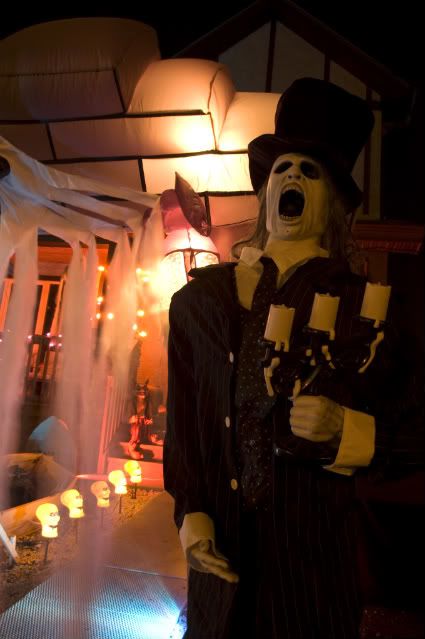
Fandango asked for something to do with a candleabra (here) and the very notion of it seems to conjor childhood nightmares for me. There’s a bit of Boris Karloff about it, don’t you think? The Adams Family used to own a lot of candleabras I believe.

So maybe, in a certain light, the congealed wax gathered at the base might be confused with blood and dried tears ….

Candlearbra

*

Little notions flicker bright

Burning softly in the night

A candelabra by the bed

That’s shone through every book you’ve read

Lighting paths within your head

Igniting fears, a glowing dread

Collecting blood already bled

Drying tears already shed


With dawn amnesia comes again

A brief respite to quell the pain

Forgotten horrors in the night

Hidden from the candlelight

Not out of mind, just out of sight

A raven that has taken flight

Still lingering, that fading dream

The burning wax still makes you scream

*

The Man Beneath the Glass

I made mention, a while ago, of the news that I had survived the first round of the NYC Midnight Short Story Competition. My second round entry showed vague promise Here but that was where it ended. The story came in 7th in the heat and needed to come in the first 5. Not dramatic enough, apparently. Bugger. Back to the drawing board.

So I entered the Flash Fiction competition and was asked to create a ghost story set in a dentist’s office and featuring a diorama.

It was all a bit of a rush. The first story I wrote I thought to be not too bad, but just before submitting it I realised that the maximum word count was 1000, and I had worked on 2000.

So the whole thing had to be halved (absolutely butchered, in other words) I made another technical error in submitting it and will likely be DQ’d. So this page will probably be as far as it gets.

***

The Man Beneath the Glass

A woman with a toothache debates art and history with a Nazi War Criminal.


She awoke in agony. The cheap gold implants from Thailand had not been such a great idea. The pain a retribution for the sin of pride. She took six codeines and followed them up with a line of coke before heading off to her hastily arranged appointment.

She found herself in the dentist’s waiting room beside an elderly gentleman cradling an ornate box upon his lap. He was gazing with wonderment around the space they shared. “Amazing!” he proclaimed.

She welcomed the opportunity to chat as a way of diverting her mind from the pain. “What is it?” she asked

He responded with a strong German accent, “This place,” he said, “the modernity of it all. Nothing like it in my day!”

“No.” She pointed to the box, “I mean what is that?”

“Oh,” he replied, “a diorama. A life’s work, in a way. A gift for my grandson. He’s the dentist.”

“So, you were a dentist too? A dior-what?”

“I was. And this is a sort of three-dimensional painting, to be interpreted from many perspectives.”

The drugs were having their effect and she imagined that any interpretation of her own may be thus inhibited. Or uninhibited. On closer examination she discovered the box to be an intricate model of a building, lightly brushed with snow and enclosed in a glass dome. The building itself was brown and drab, but beneath the snow she detected a faint glow. “You made this?” she asked.

“Yes I did,” he confessed proudly, “recently. Though it is a relic from the past.”

“A place where you lived?”

“Where I worked, in Germany, in a different world.” He held his hand out by way of formal introduction. “Martin,” he said.

She took his hand but recoiled at the coldness of his skin. “Hannah.”

“Hannah?” he repeated, “A Hebrew name. You are Jewish?”

“Not particularly.”

He grinned. “Shaking hands with a German! How things change! Or are we off to a bad start?”

“Not so far.”

A slightly uncomfortable silence ensued before he spoke again. “A German and a Jew walk into a dentist’s office. A joke?”

“Not a funny one.”

“Perhaps not. We Germans are not known for our humour.”

“And we Jews form a line of stand-up comics.”

“It’s good that you can laugh about it.”

“About what?”

“Never mind.” He was serious for a moment, and Hannah sensed in him something she didn’t like. She dismissed it as a reaction to the pain, or to the drugs, or to both.

“So, you made a model of a dentist’s surgery where you worked long ago as a dentist to present to your grandson, who is also a dentist,  and you put it in a glass box to protect it from what?”

“Are you mocking me?”

“Interpreting. From my perspective.”

“Time.”

“What?”

“I’m protecting it from time.” Even spoken gently, there was resentment in the words, and Hannah wondered if this grandson and the modern dentistry might represent that cold enemy – the relentless glacier of time. But the old man seemed to sense her thoughts and he spoke without being asked, “my grandson is a traditionalist. He understands the old ways.”

“Tradition can be dangerous.”

“Don’t lecture me on tradition, my young Jewess.”

“Please don’t use that word.”

“It is just a word.”

It was clear now. He was baiting her. “Don’t try to frighten me.” She despised him.

“The dentist frightens many, but in an age of modern anaesthetics, there remains little to fear. It wasn’t always that way.”

“In traditional dentistry, do you mean?”

They exchanged glares until the German changed tack. “Look into the diorama and tell me what you see.”

“I see a drab deserted building in the snow. I see desolation.”

“Yes,” responded the German, “quite beautiful. What else do you see?”

“I see something shining beneath the snow,” Hanna admitted, “maybe the faintest glimmer of hope.”

The old German placed his hands around the diorama and hugged it. “Then I approve of your interpretation. For that glimmer, that glitter, is gold. The last such surviving remnant of my work.”

The drugs were wearing off and she sensed that she was losing a battle. “Let’s stop,” she suggested.

But he would not be stopped. “The relationship between gold and dentistry is long, a tradition dating back to the Etruscans, and one practised by your ancestors. I can see, when you bare your teeth, as you so frequently do, that you honour that tradition.”

She clamped her jaws shut and felt the lightning rod of pain run through her body. “Please stop,” she begged.

He continued. “And you have heard perhaps, the rumours of dentists of the Third Reich, extracting golden teeth from the cadavers of deceased female prisoners of your own kind? Some of them not yet quite deceased, perhaps. Gruesome work. But rewarding. Repatriating those fading glimmers of hope to the rightful owners.”

She was sobbing now. The pain was overwhelming. “Who are you, Martin?”

“Like my art, like my work, I am open to interpretation. Who do you think I am?”

“I think you may be the devil.”

The German stood slowly and placed the diorama on his vacated seat. “Such has been said before. And now I have overstayed my welcome. Could you deliver this little gift on my behalf?”

And then he was gone.

*

The lights seemed suddenly brighter.

“Dr Hellinger will see you now.”

Hannah saw the approach of a man in white gown and surgical mask, a recognisable smile beneath the mask. She was holding the diorama, and she handed it to him. She saw the inscription on its base: Ravensbrück 1944.

“A gift from your grandfather,” she heard herself say.

Dr Martin Hellinger merely glanced at the gift. “Quite beautiful,” he murmured, the accent German, “and though the man you speak of passed away in 1988 he endures as my constant inspiration. Now come into my surgery and open your mouth wide. We will find what it is that troubles you.”


How could I refuse?

I thought it time to write something. Anything. And to write it quickly. My concentration span is so short these days that everything needs to be done quickly. I need to fit things in between daydreams.

I was reading about Linda’s SOC Here, which demands minimal time and thought and this week required that replies begin with a question. Mine was, ‘why do we need more questions?’, or something like that. I don’t think I even bothered to send it to Linda. It seemed rhetorical.

At the same time I read a comment about my latest contribution to Chel’s Terrible Poetry Contest Here, where I feel always on the very precipice of greatness. Somebody had the temerity to suggest that my poetry wasn’t sufficiently terrible, but I took that to be an expression of artistic envy, directed at one to whom ‘terrible’ is something that comes with such natural ease.

Anyway, to sort of settle things properly I sat down (very briefly)§ and wrote the following. It’s fairly terrible and although it doesn’t start with a question (a terrible disregard for the rules) it contains plenty of them. And provides no answers.

It ponders on matters that you have all heard from me before. The nature of true terribleness relies heavily on boring repetition.

*


Sunday

As the sun falls

A night yet to pass

Until Monday calls

The bells are ringing

Can you hear them too?

Are they calling me?

Were they calling you?

 Watching

As it all goes past

Remember a forever

That could never last

There was a light in your eyes

Is it shining now?

And music on your lips

I still hear somehow

 Darkness

But for passing stars

Are you out there still?

Is there life on Mars?

There’s a place up ahead

Where you used to be

I remember the address

I still hold the key

Smiling

She’s wearing your hair

A phantom in the mist

Breathing your air

There’s a ghost in the house

Wearing your shoes

And with a smile like that

How could I refuse?

 Monday

And the light returns

It’s cold in the house

Where the fire still burns

The music plays

It let it play for you

If the song ever ends

What am I to do?

*


NYC Midnight. Another surprising judgement.

There’s no point in getting too upbeat about this. I have learned this over time.

But I did manage to get a 3rd place in this years first round heat. It is hardly a spectacular achievement. Each heat had about 35 entrants and there were about 120 heats. Only the first 10 in each heat progress to round 2, but that still adds up to about 1200 people, and very few of them would have a track record as bad as mine.

I did manage a 2nd place in in the first round of this event a few years back, only to crash out in the second round …. so the results are predictable this year too.

But anyway, it needed to be 2000 words or less and be a thriller concerning a divorce lawyer and the idea of ‘priceless’. Before anyone says anything I will confess that it’s not very thrilling. I have also always covered up my geaneology since the judges are all Americans (I think), but this one is undeliably Australian.


**

Priceless.

Dr Howard Riley, a prominent and wealthy Sydney

surgeon, seeks out unconventional representation to negotiate his

divorce settlement.

*


You know that she has hired the most expensive legal representation available because you have already witnessed the steady stream of funds bleeding from your account. And you are well acquainted with her lawyers, a team of smiling Armani-clad mercenaries with offices at your own Macquarie Street address. Divorce breeds nastiness, and professional nastiness comes at a price. She would have expected you to do likewise, paying through the nose for hired guns, but you have elected to adopt an approach more akin to guerilla warfare.


And so it is that you find yourself, not in the standard perfumed leather and mahogany offices of legal royalty, but walking from the carpark to a dingy bar down by the quay. You sidestep your way through the ferry terminal and across a river of umbrella-bearing Japanese tourists before entering the cavernous squalor of the Downunder Bar. The sun is setting over the harbour bridge and the shards of light finding spaces between the clouds only serve to amplify your temporary blindness.


Exchanging the aromas of diesel fumes for those of stale beer and antiseptic, you locate him at a table staring absently into an empty glass. He is recognisable immediately from old photographs of better times, himself and his now ill-fitting suit having only grown older and shabbier with the years. He slides a card over the table that formally introduces him as Daniel. J. Silverstein, Legal Consultant and Private Investigator. You do not offer to shake hands because you sense in him that the essence of his trade in hatred has, long ago, found its way into the very pores of his being, and you know him instantly to be the type for whom the terms justice and retribution are easily interchangeable. He is, in other words, perfect.


“I understand that you were once a partner in McDermott and McDermott,” you say.


“McDermott-Silverstein-McDermott,” he corrects you, “I took the rap for those guys and now I’m just a conjunction.”


“You realise that that’s who Clara is using?”


“I most certainly do. So, I’m as keen as you are to take them down, Dr Riley.”


“She’s a bitch,” you inform him, by way of legal direction.


“Aren’t they all? When the former Mrs Silverstein, speaking of bitches, chose to side with the McDermotts during my alleged embezzlement case, they threw in our divorce as part of the deal. Revenge will be sweet.”


A tattooed waitress addresses you by way of a raised false eyebrow and you say, “two more of whatever he’s having,” in keeping with the dark poetry of the moment. You turn again to Silverstein. “What dirt have you dug up so far?”


He reaches into his tattered briefcase and refers to his notepad, “I can easily connect her with several coke dealers, a dodgy tantric masseur, and the leader of some fake religious cult.”


“Her artist friends? No surprises there. What about a lover? Who’s she sleeping with?”


“She’s been granting carnal favours to a rugby league player of some notoriety. A big ugly bastard.”


“She’ll fuck anything if it works in her favour.” You take a swig from the glass that has been placed in front of you before continuing, “but listen, you need to come up with something better. Couldn’t she be implicated in some kind of major crime? Murder or the like?” You are not entirely serious.


But he is, and looks you in the eye, whispering, “she could be. Evidence has a habit of popping up at the most inconvenient moments. For the right price.”


The sun has gone now and you are aware of a heavier darkness drifting into the bar, making you shiver. “I am a highly respected surgeon, Silverstein. I don’t want to get mixed up in that sort of stuff.”


“You probably didn’t want to get mixed up in underaged prostitution, either. But these things happen.”


He is easy to dislike. “I didn’t ask for a lecture in morality,” you tell him, “hookers rarely provide birth certificates.”


He shrugs his shoulders and you detect a grin, “it’s funny how documents and dates always find their way into these things. You wouldn’t be the first guy to get screwed over by a mix up in timing. Even anniversaries are matrimonial landmines. The former Mrs Silverstein’s birthday, was….”


“Forget all that. What’s the current Mrs Riley asking for?”


He reaches into his briefcase again and produces a document printed on McDermott and McDermott stationary from which he reads. “The house, the furniture, the artwork, the BMW, 50% of the share portfolio, and 50% of the cash….. she seems fully acquainted with your offshore accounts.”


“And what do I get?” you ask, aghast.


“Well, I have looked into that and I must tell you that 50% of the cash and shares is hardly an insubstantial amount. She’s also offering you the Mercedes and the dog.”


“Does that sound acceptable to you???”


“What sort of dog is it?”


Daniel J. Silverstein knows more about dogs than art, it transpires, so you attempt to educate him. “The artwork is worth more than all the rest combined.” You know this only because your interest in art is based entirely upon its extraordinary inflationary characteristics.


He is shaking his head, “I have seen her artwork, and I doubt that it would fetch more than $30 at a garage sale.”


“Her paintings are worse than worthless. She admits so herself. This is about other people’s paintings, her collection. Real Art. The expensive kind. She’s got three Olley’s, two Whiteley’s and a Sidney Nolan classic. That’s just the Australian stuff. All purchased with my money. There’s a Jackson Pollock hanging over the fireplace that she acquired only a few months ago.”


“Worth?”


“Oh, God knows. She’s the expert. Olley maybe a million each, The Nolan probably a lot more. We’ve been offered seven million each for the Whiteleys…”


“I see.”


“The Pollock, though, is priceless, evidently. She hasn’t stopped boasting about the bargain she got it for. She loves that painting. But she knows I’d sell it in a heartbeat.”


Silverstein considers this fresh information carefully, “Priceless? Really? So, you’d let her have everything else if you could just keep the Pollock? Even the house?”


“She can have the house. I moved out just after the Pollock moved in. For me it’s mostly just a receptacle of bad memories. But she won’t part with the Pollock. Forget it. She probably looks at the bloody thing as often as she looks at herself in the mirror. We need some sort of bargaining chip to prise the rest from her grip.”


Silverstein is looking into the middle-distance. “She’s booked an overseas holiday,” he says thoughtfully, “and she wants this all sorted first. We might be able to rush her into a mistake.”


Silverstien has clearly done his research.


The rain is falling as you are driving back to your hotel and your mood has darkened. The phone rings and it is your wife and you say, “yes,” expecting the usual expletive-laden rage in reply.


But her voice is calm and measured. “Howard, darling. I’m impressed. I doubt that you could have found a lower form of humanity with whom to wage war against your own wife than Danny Silverstein. What rock did you find him hiding under?”


“Are you having me followed, Clara?”


“Oh, Howard, you poor sap. I’ve been having you followed for years.”


You terminate the call and immediately realise that you are, indeed, being followed. The black van behind you has been there for too long. When you slow down it overtakes you and then pulls across in front, blocking any possible escape. Three large figures emerge, two of them carrying baseball bats. You watch in horror as they nonchalantly approach your car and raise the bats over their shoulders. You hear the sound of breaking glass. The third of them beckons you to wind down your window which you do because there is no obvious alternative. “Excuse me Sir,” he says politely, “but I could not help but notice that your headlights have malfunctioned. I feel compelled to remind you of the danger that motoring on a dark wet night such as this might hence expose you to. So, I urge you take particular care. Good evening to you, Doctor.”


You remain stationary as the van pulls away and discover yourself measuring your own pulse. How did he know you were a doctor?


You have only just entered the safety of your hotel room after navigating the streets in fearful darkness when the phone rings and this time it’s Silverstien on the other end and there is tension in his voice. “Listen Doc, I’ve got good news and bad news. The good news is that your wife may soon be implicated in a double homicide. The bad news is that photographs of our mutilated bodies will be the primary evidence.  So, it’s all bad news, really. I had an impromptu chat with a few of your wife’s associates after leaving the bar. They’ve given me a final offer for you to sign. It’s an all or nothing type arrangement, and my strong professional advice is that you should sign it. It’s coming to you by courier tonight.”


“My wife’s associates? Three monsters in a black van?”


“That would be them.”


“Footballers?”


“Maybe. But more than handy with baseball bats as well. I’m at the hospital now. Two

broken legs and a fractured skull.”


“Should I come round?”


“Fuck, no. Stay away from me. After this conversation I’m off the case.”


“Then what’s the deal?”


“She gets everything but the Pollock. And the dog. Though I reckon you can keep

the Mercedes.”


“Wait. The Pollock? Are you sure?”


“Take the deal.”


“I mean the Pollock?? Mine? It really is priceless, you know. Is she insane?”


“She certainly comes across to me as certifiable, but I’m not taking her to court over it. Forget about my bill. I’m cutting my loses. Goodbye.” The phone goes dead.


You are surprised that Silverstien has been so easily intimidated but thankful that he has somehow pulled off a miracle. The Pollock!! It’s a terrific result for the price of two headlights.

So, when the paperwork arrives you check the wording carefully and place your signature below hers. You hand it back to the courier with explicit directions to have it certified by morning. The Pollock is yours.


Two weeks later the sun is shining brightly through the drapes when there is a knock at the door and three hotel staff enter carrying a large frame wrapped in brown paper. You already have a reputable art dealer downstairs waiting and you call for him to be sent up. He is up in a flash and it is with the hands of a surgeon that you carefully remove the wrapping to unveil the trophy. The masterpiece is revealed.


“Very unusual,” he nods, “Pollock is not normally known for his life-size giraffes.”


“But there it is’” you announce proudly, directing him to the bottom righthand corner, “Pollock August 1958. One of his later works.”


“Very much later, I’m afraid. Jackson Pollock died in December 1956. This looks more like something my granddaughter did last week.”


You know you’ve been had and your self-esteem has hit rock bottom. The smart-arse art dealer was laughing as you pushed him out of the door. Silverstein’s phone is dead and a search of all hospitals provides no record of his admittance. In your rage you lift a chair and hurl it at the painting, receiving little solace from the sound of splintering wood and ripping canvas, but revealing an envelope bearing your name which has fallen to the floor. You open it and find inside a photograph of a couple sunning themselves on a tropical beach. The happy pair are the former Mrs Clara Riley, and Daniel J. Silverstien, Legal Consultant and Private Investigator.


There is a message on the back which reads:


Fiji. Danny and Clara. September 2023. Priceless.

*

**